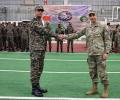
'When our soldiers trained side by side, we demonstrated to the world that our partnership is strong, enduring and prepared to meet any challenge.'
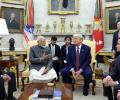
'As one former Indian diplomat put it to me, Delhi has access to the White House, but Islamabad has access to Mar-a-Lago.'

It's a strategic approach in which the country's military and defence mechanisms evolve continuously in tandem with emerging threats. The new strategy anticipates events and prepares to counter those proactively.
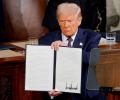
'Decline of the UN did not start with the Trump administration. It has been happening over the last two decades or more.'

Bumrah's lethality lies in the moments - in the cold stares, the silences, the small tells that say everything.

What despots and dictators, jammers and competitors, had not managed to do in 83 years -- what the Soviet Union had failed to counter during the Cold War; what China had failed to crush during the Tiananmen Square uprising -- a US President had succeeded with his own hand, notes Krishna Prasad.
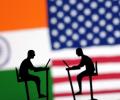
Commerce and Industry Minister Piyush Goyal on Tuesday expressed hope that India will conclude the proposed bilateral trade agreement (BTA) with the US by the fall or November this year. He said that "a little bit" of geopolitical issues overtook the trade matters in the negotiations for the pact between the two countries.

Bhool Chuk Maaf released last Friday, we decided to look at 10 instances of tinsel town's famous folks burying the hatchet.

The Indian position on the Russia-Ukraine war and the unconditional treaty between China and Russia appear to have caused some ripples in India-US relations and led to a reappraisal of India's usefulness to the US in the eventuality of a conflict with China, notes Ambassador T P Sreenivasan.
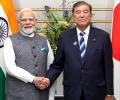
Prime Minister Shigeru Ishiba's sudden resignation after only a year in office has thrown Japan into political turmoil, raising doubts about how the country will handle economic and regional challenges, observes Dr Rajaram Panda.
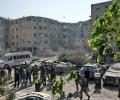
At the end of the day, for many worldwide, the ongoing mutual attacks between Israel and Iran would seem a contest devoid of any moral high ground and only a bout between two ordinary adversaries, one that nevertheless risks spinning out of control into a larger conflagration, notes Shyam G Menon.

'What India has done will surely embolden more countries to stand up to Trump.'

On December 10, Kissinger began to encourage the Chinese to take action against India: 'If the People's Republic were to consider the situation on the Indian subcontinent a threat to security, and if it took measures to protect its security, the US would oppose efforts of others to interfere with the People's Republic.' On the 50th anniversary of India's greatest military victory, Claude Arpi recalls how the US suggested that China intervene militarily on Pakistan's side.
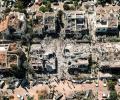
Trump has a major decision to take in coming days -- specifically, how to rescue Israel from the attritional war that lies ahead, points out Ambassador M K Bhadrakumar.
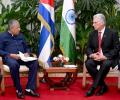
The warmth and respect for India were evident wherever I went and noticed how most Latin Americans have Indian gurus either directly or online and yoga was very much in vogue, observes Ambassador T P Sreenivasan.

Kissinger's approach of balance of power, secret diplomacy and moderating ideology are the need of the hour. That is the greatest tribute to an intellectual who had a major impact on the world in his lifetime, notes Colonel Anil A Athale.

Stunning landscapes, natural beauty, clean beaches, cultural wealth, mouth-watering food, shopping options, safety for solo travellers, warm hospitality, easy visas, and connectivity make Vietnam a must-visit destination, discovers Ramesh Menon.
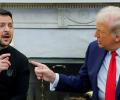
'Putin will not be bound by any kind of deal he would sign with the US.'
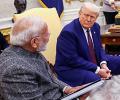
To those who ask, "Is all this really worth it? Why can't domestic demand fill the gap?", it is important to remind them that only 13 economies since the Second World War have grown at 7 per cent or more for 25 years -- like India needs to. They all had one thing in common: Strong export growth underpinned by strong global engagement, explains Sajjid Z Chinoy.

Had it not been for the slow but sure emergence of China as a threat to the western order, would India have been accepted as a near-equal partner by individual western nations, jointly and severally, questions N Sathiya Moorthy.
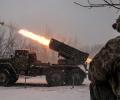
A peace keeping role for India is a distinct possibility. Indian military has both the numbers and experience to carry out this job, observes Colonel Anil A Athale (Retd).
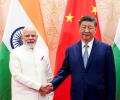
'What's currently underway is not a 'reset'.' 'What needs to be arrived at is a new balance.'

The unalloyed truth about the Ukraine-Russia conflict is that it is a war that Russia cannot lose and Ukraine cannot win, observes Colonel Anil Athale (retd).
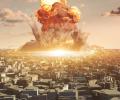
A step away from nuclear weapons being used in conflicts, warns Colonel Anil A Athale (retd).
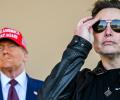
United States President-elect Donald Trump's plan to overhaul the government with a new department headed by tech billionaire Elon Musk and Indian-origin entrepreneur Vivek Ramaswamy will be a biggest threat for China as it has to compete with far more efficient US political system, a policy advisor to the Chinese government said.

A genuine attempt was made to reset relations in a positive way, signalling a stepping back from the brink of conflict, much to the relief of the world, observes Ambassador T P Sreenivasan.

'Putin is just flexing his muscles. He is not going to do anything. He is not that crazy.'

New Delhi has reached out to Moscow while waiting for a new president in Washington. New Delhi knows well that in international relations, there are no permanent friends or foes, only permanent national interests, points out Dr Rup Narayan Das.
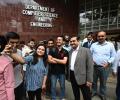
'If you align your ambition with India's rise, the peak of your careers will unfold alongside the peak of India's power.'

Indian policymakers must realise that in buying small quantities of equipment, it becomes hard to start manufacturing them in India, explains Ajai Shukla.
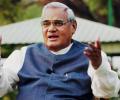
It was good fortune for India to have Atal Bihari Vajpayee lead the government at a crucial moment in our history. He avoided India meeting the fate of Iraq or Ukraine, asserts military historian Colonel Anil A Athale (retd).
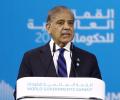
Sharif said that the US president had shown beyond any doubt that "he is a man for peace... and beneficial business deals".

'He may respect others, but he is unlikely to admire them'
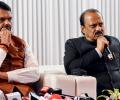
'Let Fadnavisji prove to the people of Maharashtra that he acts fairly against one and all.'
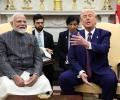
'Trump's aggressive stance towards China and preference for military posturing could shift the Quad's balance towards overt militarisation.'

The highlight of Tuesday's debate on Operation Sindoor was the speech by Prime Minister Narendra Modi, with the rebuttal by Congress's Wayanad MP Priyanka Gandhi coming a close second.

Kareena has been a leading lady now for 25 years, Deepika for almost two decades and Alia for over a decade. Dinesh Raheja chronicles the changing ways Bollywood has treated actor-moms.
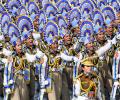
Three young officers, grandsons of war veterans, will lead contingents at the 76th Republic Day parade in New Delhi, continuing a family tradition of military service. Lt Ahaan Kumar will lead the 61 Cavalry, Lt Cdr Saahil Ahluwalia will lead the naval contingent, and Capt Ritika Khareta will lead a contingent of the Corps of Signals. The parade will also feature new stunts, including a "Bullet wheelie" by Capt Ashish Rana and a salute by Capt Dimple Singh Bhati on a 12-ft ladder mounted on a moving motorcycle.
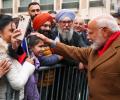
Prime Minister Narendra Modi arrived in France on a three-day visit during which he will co-chair an AI Action Summit with French President Emmanuel Macron and hold bilateral talks with him. Modi will also be warmly greeted by the Indian community and address the India-France CEO's Forum. The visit will include a visit to the Mazargues War Cemetery and the inauguration of the new Indian Consulate General in Marseille.

The CDS has the option to focus on key areas of capability development to fight new generation wars or get bogged down in trying to bring cosmetic changes to humour the political leadership, asserts Brigadier Narender Kumar (retd).
